

French Data Centers: Key figures, regional hubs, and selection criteria
Data centers in France: the French Agency for Ecological Transition (ADEME) reports 352 active data centers in 2025. This guide covers market volumes, regional hubs, operators, energy consumption, and artificial intelligence projects. It also features insights from Thésée Datacenter, which operates two data centers in Western Paris.

How many data centers are there in France?
In 2025, ADEME reported 352 active data centers across France. French news outlet franceinfo echoed this figure on June 1, 2026, alongside the sector's estimated power consumption.
These figures vary depending on the scope considered. RTE, the French electricity transmission system operator, works with an estimate of around 300 sites. This footprint is not limited to colocation facilities.
In October 2025, ResearchAndMarkets identified 152 operational colocation data centers and 20 under development.
Here are the key figures for data centers in France in 2026.
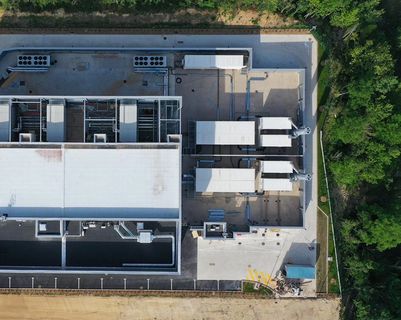
Our perspective: a national total provides little insight into the actual quality of the sites. For mission-critical clients, certifications and resilience matter far more than the sheer number of facilities.
Where are data centers located in France?
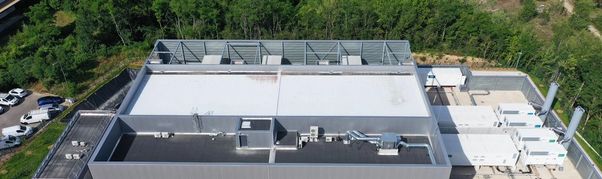
According to the Institut Paris Region observatory, the Île-de-France region accounts for roughly a third of all French data centers. It features 213 data centers across 139 sites in the Paris region, 159 of which are already operational. Over 60 new projects are being added to this regional footprint.
Among them, 21 are under construction, eight are scheduled, 19 are pending approval, and 14 are in the planning phase. The French infrastructure therefore remains highly concentrated. The first facilities were established in Seine-Saint-Denis on compact urban plots. The Essonne department later expanded around the Paris-Saclay hub. Recent projects now frequently exceed 10 hectares and require 50 to 100 MW of power.
Thésée Datacenter established its campus in Western Paris, away from these dense clusters. This location helps clients already hosted elsewhere in the Paris region to build their Disaster Recovery Plan (DRP)
Beyond the Paris region, three main trends stand out:
- Hauts-de-France: In May 2026, RTE reserved nearly 6 GW of grid connection capacity in the region. By comparison, Île-de-France stands at around 7 GW. At the Choose France summit on June 1, 2026, three mega data centers were confirmed for the region. SoftBank is developing these facilities in Loon-Plage, Bouchain, and Bosquel.
- Marseille: The city hosts numerous international subsea cables. This connectivity positions it among the leading global interconnection hubs.
- Auvergne-Rhône-Alpes and regional hubs: the Isère department hosts data center facilities in Villefontaine and Eybens. Lille, Lyon, Bordeaux, Nantes, and Toulouse also offer colocation services.
Which operators shape the French market?
No official public ranking quantifies operator market shares. Private studies nevertheless provide benchmarks based on their own methodologies.
In October 2025, ResearchAndMarkets cited Digital Realty, Equinix, and Telehouse among the leading colocation operators by rack capacity. Regarding future capacities, the study places Icade, OpCore, and Data4 at the forefront.
The market also encompasses independent operators, cloud providers, and private data centers. For instance, several banking groups operate their own certified facilities. The industry comes together under the France Datacenter association

Our perspective: an operator's size alone should not be the sole basis for a decision. First, examine the tangible guarantees: certifications, location, applicable law, and governance.
How much energy do data centers consume in France?
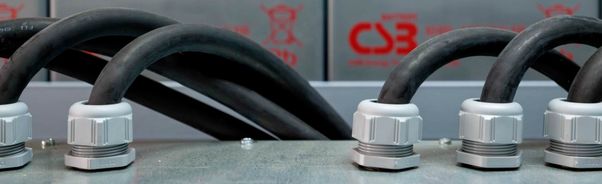
In France, data centers consume approximately 10 TWh of electricity annually. This accounts for nearly 2% of the national total, according to RTE.
ADEME compares this footprint to that of roughly ten urban areas with over 100,000 inhabitants. The projected growth remains substantial: RTE forecasts between 15 and 20 TWh by 2030, rising to 23 to 28 TWh by 2035. Data centers would then represent about 4% of France's total power consumption.
As of May 2026, RTE has already reserved nearly 18 GW of power capacity across approximately 80 projects. Operators estimate a 10-to-15-year timeframe to utilize 80% of this allocated power.
According to the French Directorate-General for Enterprise (DGE), data centers accounted for 46% of the digital sector’s carbon footprint in 2020. Facilities with a capacity of 500 kW or more are now required to report their indicators in accordance with the European Energy Efficiency Directive.
Our view: energy efficiency is becoming a major factor in site selection. We report a design PUE (Power Usage Effectiveness) of 1.2 and monitor our energy consumption under ISO 50001 certification. Our comprehensive approach is detailed in our Corporate Social Responsibility (CSR) policy.
Projects and investments: the impact of Artificial Intelligence
The pace of announcements is accelerating, driven by artificial intelligence (AI). The February 2025 AI Action Summit generated a total of €109 billion in announced private investments.
The DGE has also identified 63 sites suitable for data center development. On June 1, 2026, the Choose France summit announced €93 billion in foreign investment across all sectors.
The Fouju campus notably brings together the Emirati fund MGX, Nvidia, and Bpifrance. ZDNet describes it as the largest European campus dedicated to AI.
Our perspective: these mega-campuses are designed for High-Performance Computing (HPC). Mission-critical enterprise applications, however, primarily require certified resilience, proximity, and clear jurisdiction. In Aubergenville, we are developing a modular campus with an ultimate capacity of 50 MW.
Which data centers in France are Tier IV certified?
The Uptime Institute classifies data centers into four tiers, from Tier I to Tier IV. Tier III allows for maintenance to be performed without disrupting the IT load.
Tier IV adds fault tolerance, meaning a single, isolated incident will not interrupt power or cooling to the data halls.
A Tier certification is validated in two stages. 'Design Documents' approves the engineering plans. 'Constructed Facility' certifies the physical build following on-site testing.
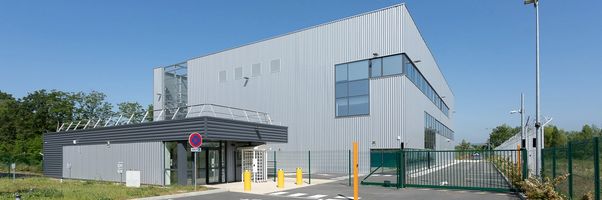
In September 2026, we consulted the Uptime Institute’s public registry. Seven French sites hold the Tier IV Constructed Facility certification:
- Data 17 SAS, with its DATA 17 DC01 site.
- Euro-Information, with its sites in Verlinghem (Nord), Saint-Apollinaire and Fauverney (Côte-d’Or).
- SostraData, with its site in Saint-Maurice-la-Souterraine (Creuse).
- Thésée Datacenter, with its campus in Aubergenville (TDC01), in Yvelines.
- XEFI, with its site in Reventin-Vaugris (Isère).
Five other sites hold Design Documents certification only. With its Aubergenville campus, Thésée Datacenter is one of the few operators in France to hold Tier IV certification. Our Tier IV-certified data center page provides further details.
How do you choose a data center in France?
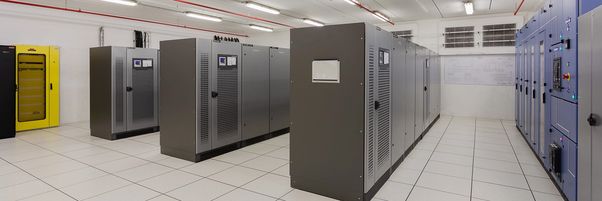
The right facility depends on the criticality of your applications and your regulatory constraints. Your disaster recovery strategy also comes into play.
- Resilience: verify the certified Tier level, the type of certification, and the specific facility mentioned in the Uptime Institute letter.
- Healthcare data: require an HDS-certified provider (Health Data Hosting). Visit our HDS-certified data center page.
- Information security: verify the ISO 27001 certificate and its scope. Include PCI DSS compliance (payment card security standard) if you process payments. View our security certifications.
- Digital sovereignty: verify the applicable jurisdiction, the ownership structure, and public credentials, such as the Gaia-X Level 3 label. Visit our sovereign data center page.
- Energy: cross-check the advertised PUE against verifiable commitments, including ISO 50001 certification.
- Location: calculate the distance between your primary site and your Disaster Recovery (DR) site. Also verify access to the power grid.
Before signing any contract, ask each operator about the following:
- Which document verifies the claimed Tier level, and which building does it cover?
- Which HDS-certified activities are listed on the certificate, and which sites are covered?
- Where are backups hosted, and which jurisdiction applies?
- What exit and data portability provisions are included in the contract?
Evidence, not promises. Thésée Datacenter is one of the few operators in France to hold Tier IV certification, awarded for its Aubergenville campus.
In the Yvelines department, both our sites are certified to HDS version 2.0 and ISO 27001 standards. Thésée Datacenter is also among the first five companies to receive the Gaia-X Level 3 label. France Télévisions, Radio France, France Médias Monde and TV5 Monde chose Thésée Datacenter in 2024.
Every certificate is available online. To compare our offering against your requirements, get in touch with our team.
See also: Our Data Centers in the Île-de-France Region · Our Certifications · Our CSR Policy · Our Colocation Solutions
Frequently asked questions about data centers in France
Find answers to the most frequently asked questions about the French data center landscape, its geographical distribution, and its power consumption.
How many data centers are there in France?
In 2025, ADEME recorded 352 active data centers in France. RTE reported approximately 300 sites, based on a different scope of analysis.
Where are data centers located in France?
The Île-de-France region is home to roughly one-third of them, primarily in the Seine-Saint-Denis, Essonne, and Seine-et-Marne departments. Other key hubs are located in Hauts-de-France, Marseille, and Auvergne-Rhône-Alpes.
What is the largest data center in France?
No official ranking settles the question. According to the Institut Paris Region, the Data4 campus in Marcoussis encompasses more than 20 buildings. As for upcoming projects, the Fouju AI campus is targeting 1.4 GW.
Who is the leading data center provider in France?
No official source names a dominant operator. In October 2025, ResearchAndMarkets cited Digital Realty, Equinix, and Telehouse among the top colocation providers by capacity.
How much power do data centers in France consume?
According to RTE, they consume approximately 10 TWh per year, accounting for nearly 2% of France's total power consumption. RTE projects this figure to reach between 23 and 28 TWh by 2035.